
Claim Financial Reconciliation
Money issued is not always money available to complete the work.
A clear account of what was estimated, what was paid, what is being held, and what is still open.
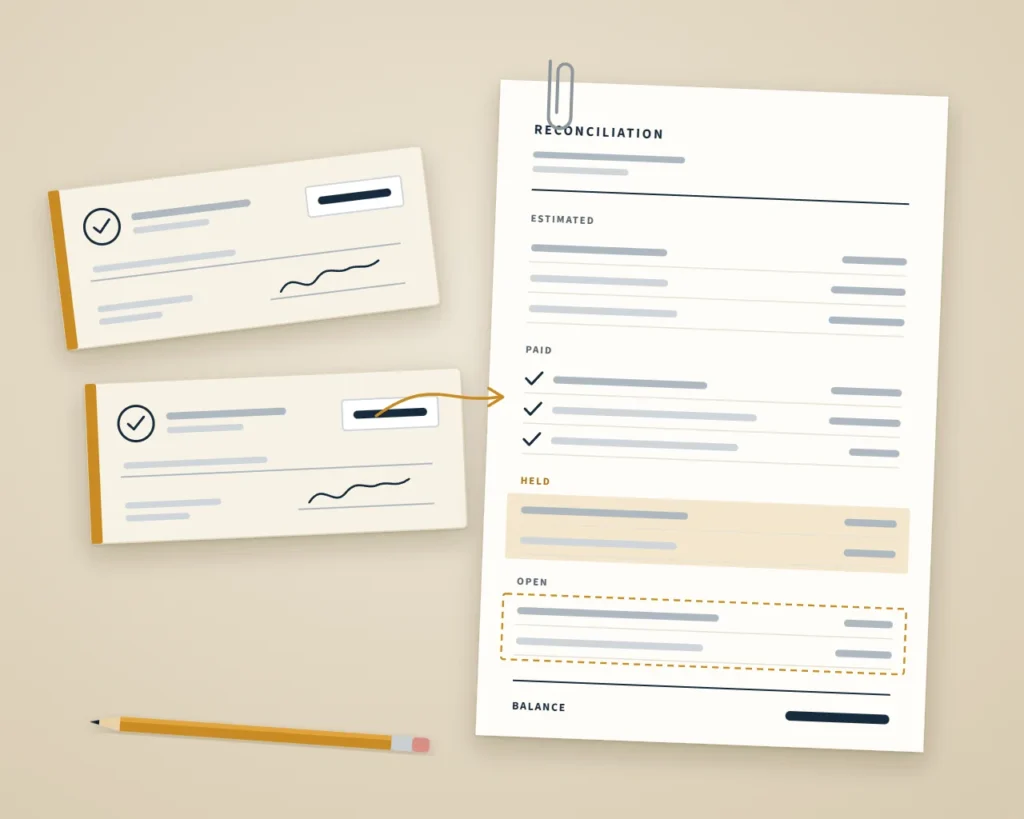
The payment record and the repair budget are not the same thing
A claim file may show substantial payments while the insured has access to only part of the reported total. Checks may include a mortgage company, funds may remain in a lender-controlled account, vendors may have been paid directly, and recoverable depreciation may remain conditional. Deductibles, prior payments, advances, and estimate revisions can further obscure the practical funding position.
Claim Financial Reconciliation organizes those moving parts into a single record. It answers what was valued, what was issued, where the money went, what can presently be accessed, what remains subject to a condition or control, and what cannot yet be explained from the available documents.
What the reconciliation distinguishes
Valued amounts
RCV, ACV, depreciation, deductible, tax, overhead and profit, and other summary figures shown in each estimate or coverage calculation.
Issued amounts
Checks, electronic transfers, advances, reissued instruments, voided payments, and direct payments reported in the claim record.
Accessible amounts
Funds actually received and presently available, distinguished from joint-payee checks and money controlled by a mortgage servicer or other third party.
Applied amounts
Payments made directly to mitigation, abatement, contents, housing, consultants, contractors, or other vendors, with double-counting controls.
Conditional amounts
Recoverable depreciation, code-upgrade benefits, supplemental requests, lender draws, or other funds dependent on documentation, progress, or a later determination.
Unresolved amounts
Differences that cannot be tied to a payment instrument, estimate version, category, or supporting explanation from the current record.
The reconciliation process
- Inventory the financial record. Estimate summaries, payment logs, check copies, correspondence, lender statements, vendor records, and depreciation calculations are indexed by date and source.
- Build the estimate-version map. Each material estimate revision is tied to its RCV, ACV, depreciation, deductible, and major category totals.
- Build the payment ledger. Every documented instrument is recorded by date, amount, payee, stated purpose, status, and related estimate or category when support exists.
- Classify control and availability. Issued, cleared, accessible, lender-held, vendor-paid, conditional, voided, and reissued amounts are kept separate.
- Reconcile exceptions. Duplicates, unexplained variances, missing instruments, unsupported allocations, and amounts requiring confirmation are surfaced rather than netted away.
Potential deliverables
- A dated payment ledger with source references and status classifications.
- An estimate-version table showing how valuation changed over time.
- A funds-availability summary separating paper payments from money presently accessible for the work.
- A lender and vendor disbursement reconciliation.
- A depreciation and holdback schedule tied to supporting estimates and documented conditions.
- An exception report identifying missing records, unexplained amounts, possible duplicate treatment, and questions requiring confirmation.
What this analysis does not decide
A financial reconciliation reports and organizes the documentary record. It does not determine insurance coverage, direct a mortgage servicer to release funds, establish legal entitlement, certify that a payment was properly calculated, or promise that an unresolved amount will be recovered.
When a difference arises from omitted scope, quantity, pricing, valuation, methodology, or supporting evidence, the financial ledger may need to be paired with Estimate Analysis. When a question requires policy interpretation or legal relief, it should be addressed by qualified counsel.
Claim Financial Reconciliation: Frequently Asked Questions
Claim financial reconciliation is an accounting and documentary audit that compares what an insurer valued on paper against the funds actually issued, disbursed, restricted, or still unresolved. By organizing multiple estimate versions, check copies, electronic transfers, lender escrow statements, and direct vendor payments into one traceable ledger, Absolute Adjusting clarifies how much money is presently available to complete repairs and what balances remain subject to conditions.
A claim payment ledger often reflects gross disbursements that are not immediately spendable by the property owner. Funds may be tied up in joint-payee checks requiring mortgage servicer endorsement, held in a lender-controlled escrow account pending inspection draws, paid directly to mitigation or restoration vendors, offset by deductibles or voided/reissued checks, or withheld as recoverable depreciation until repairs are completed.
Every documented figure in the claim record is separated into six distinct buckets: Valued amounts (RCV, ACV, depreciation, tax, overhead and profit, and deductibles across estimate revisions), Issued amounts (checks, ACH transfers, advances, and voided or reissued instruments), Accessible amounts (funds actually received and spendable), Applied amounts (direct payments to vendors or housing providers), Conditional amounts (recoverable depreciation, code upgrades, or lender draws), and Unresolved amounts that cannot yet be tied to supporting records.
Depending on the assignment’s complexity, deliverables may include a dated payment ledger with source references, an estimate-version table tracking how RCV, ACV, and depreciation changed over time, a funds-availability summary, a lender and vendor disbursement schedule, and an exception report flagging missing instruments, duplicate treatments, or unexplained variances.
No. Claim financial reconciliation reports and organizes the documentary financial record; it does not determine insurance coverage, certify whether an insurer calculated a payment properly, direct a mortgage servicer to release escrow funds, or guarantee recovery of unresolved amounts. When a variance stems from omitted repair scope or pricing disputes, the financial ledger can be paired with Estimate Analysis, while questions of policy interpretation or legal entitlement belong with qualified legal counsel.
Start with the estimates, payment history, and the question the ledger must answer.
For initial routing, identify the property, date of loss, approximate claim value, number of estimate versions, known lender involvement, present repair status, intended use, and deadline. Documents are requested through an approved exchange method after fit is confirmed.