
Why Cleanup, Contents, and Reconstruction Must Be Coordinated
After a fire or water loss, an estimate may include an allowance for asbestos removal, while the rest of the proposed work follows a standard restoration plan. That allowance does not specify how contractors will access restricted areas, document personal property, handle contaminated contents, or determine when reconstruction can begin.
Asbestos-related conditions can change the way a project must proceed. The environmental evaluation, contents work, cleanup, and reconstruction need to reflect the same findings and boundaries. A supportable insurance estimate should describe that coordinated work rather than treat asbestos as an isolated demolition expense.
The presence of asbestos and a spill are different findings
A building material may contain asbestos without establishing that asbestos fibers have been released throughout the property. Conversely, damaged or disturbed material may create conditions that extend beyond the component where the problem began. Identifying the material, assessing its condition, and determining the extent of contamination are related but distinct tasks.
Under Colorado Regulation 8, Part B, inspection and sampling requirements depend on the proposed activity and applicable conditions. Section III.T also addresses disturbed suspect material: when the specified trigger levels are exceeded and asbestos content is unknown, a Colorado-certified Asbestos Building Inspector must be contacted to investigate and arrange the required analysis. Known or assumed asbestos-containing material follows a different response path.
Property owners should obtain findings from appropriately qualified professionals. Appearance, building age, or a contractor’s informal assumption should not replace the required evaluation. This is not a task for homeowners to perform by collecting their own samples or entering a restricted area.
Colorado spill requirements have a defined scope
Section III.T distinguishes between major and minor asbestos spills using the applicable trigger levels. These levels differ for single-family dwellings and other facilities. A major spill involves disturbance of asbestos-containing material that exceeds those levels; the classification should be documented by the professionals evaluating the condition.
The section applies to asbestos releases in areas of public access, with school buildings addressed separately. “Area of public access” has a regulatory meaning that includes single-family residential dwellings, subject to specific residential opt-out provisions. Applicability must be evaluated under the actual rule; a home is not outside the framework merely because it is privately occupied.
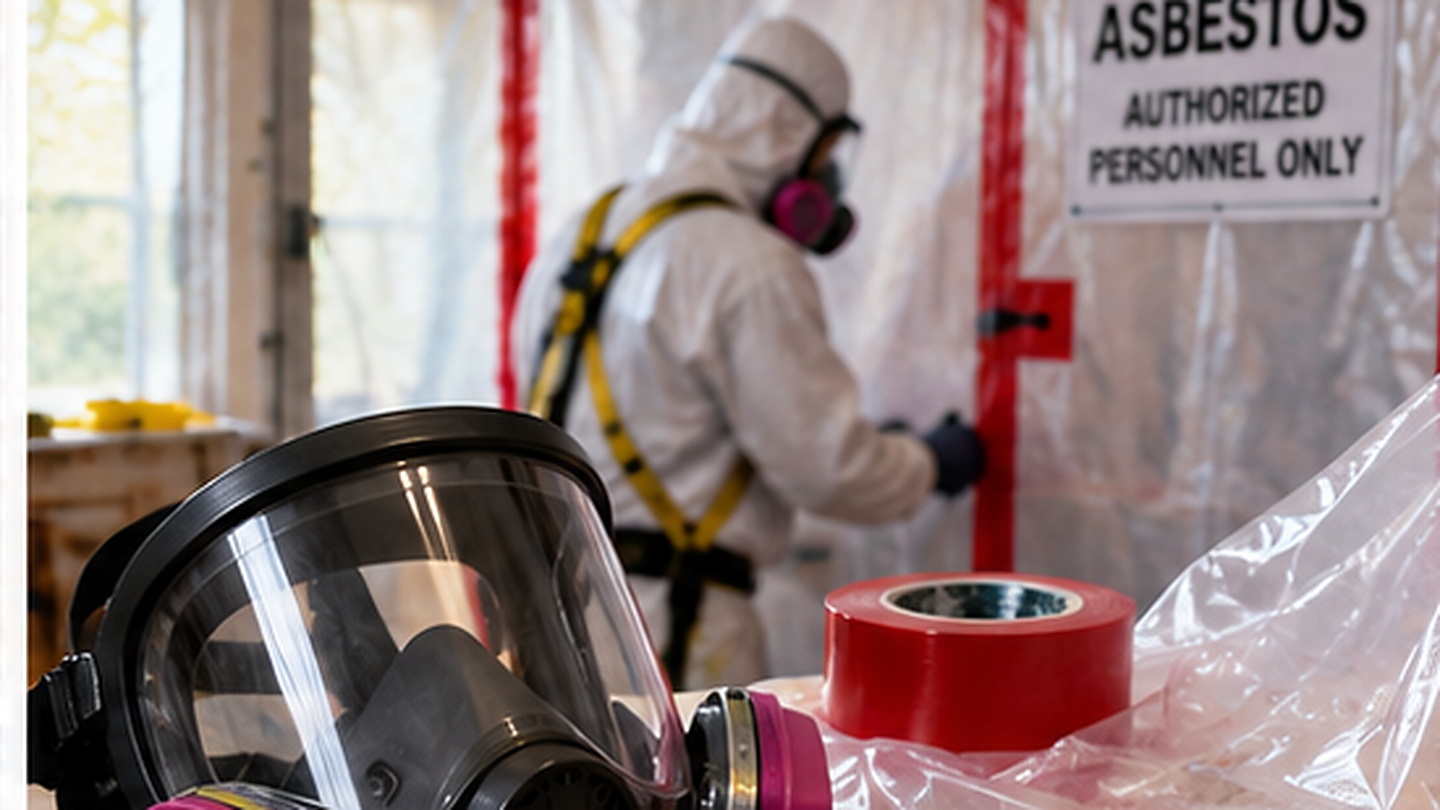
For a major spill within this framework, the rule requires access restrictions, warning signs, and controls to prevent distribution through the air-handling system. The cleanup contractor’s responsibilities include applicable notification or permitting and the prescribed containment sequence, carried out by certified Workers and Supervisors. These are project responsibilities for qualified personnel, not a homeowner cleanup checklist.
Delineation identifies the area the plan must address
For a major indoor spill, a Colorado-certified Air Monitoring Specialist (AMS) must determine the spill’s extent unless the entire facility is treated as the spill area. The regulation specifies the evaluation methods and requires that areas with visible dust or debris directly related to the known or assumed asbestos-containing material that caused the spill be included.
That boundary matters beyond the abatement estimate. It helps determine where access must be controlled, which contents require attention, and how work in adjoining areas can be coordinated. The location of the original damaged material should not be used in place of the documented spill boundary. Nor should an entire residence be automatically declared contaminated without an appropriate basis.
Documenting contents and handling them are different activities
A contents assignment should clearly explain what the person onsite will do. Taking a photograph from an authorized location differs from opening drawers, separating stored goods, turning an object to read a label, moving furniture, packing belongings, or disposing of them. Detailed identification may require activities beyond those described in an initial assignment.
Calling the work an inventory does not automatically constitute asbestos abatement. It also does not establish unrestricted access to a major-spill area. The proposed activities must be reconciled with the site conditions, access restrictions, and any applicable project-specific written directions issued by CDPHE. Section III.T.2.e expressly authorizes additional written Division measures deemed necessary to protect public health.
Before scheduling contents work, the project team should establish who will perform any handling, which controls apply, and how the records will be preserved. If identification must be delayed, the inventory should state the resulting limitation. Absolute Adjusting’s Inventory Services can help organize the contents record; environmental access and handling decisions remain with the appropriately qualified professionals and responsible authorities.
Contents cleaning and clearance belong in the same plan
The major-spill provisions expressly address carpets, drapes, upholstery, and other non-clothing fabrics; contaminated clothing; hard surfaces; and waste. Treatment requirements vary by category, with cleaning or disposal provisions for specified materials. The rule also requires that items cleaned during spill response be included in clearance. It does not impose a blanket instruction to discard every exposed possession.
The contents record should identify what was present, the selected disposition, and the supporting professional finding. Cleaning, retention, removal, and disposal records should link to identifiable items or documented groups. An unexplained disposal total does not establish what was lost; a list of retained items does not establish that required cleaning and clearance were completed.
The sequence must account for the remaining work
Environmental assessment and delineation inform the scope of response. Access controls affect how inspections and documentation can be conducted. Contents handling must align with the cleanup plan, and reconstruction must account for completion of the applicable environmental work. Some activities may proceed in separate areas or phases, but the basis for doing so should be clear.
Section III.T links spill response to final monitoring under the clearance provisions. It also distinguishes spill cleanup from the gross removal of additional asbestos-containing material, which must follow the applicable abatement sequence. When that additional removal is planned, the rule allows the spill’s final air sampling to occur after the additional removal is completed. Clearance therefore needs to be coordinated with the actual work remaining.
After a fire, demolition, contents, and restoration vendors may prepare proposals before the environmental work area and access conditions are established. Their proposed activities may depend on coordinated handling and subsequent clearance. A repair estimate should identify those dependencies, support the work actually required, and account for overlap. A general asbestos allowance can omit needed operations, while separate proposals can price the same work twice.
Estimate Analysis can compare the environmental findings with contractor scopes and estimated operations. The review should identify what each proposal includes, what it excludes, and which assumptions still require professional confirmation.
Responsibilities should be assigned in writing
An Asbestos Building Inspector identifies and assesses suspect building materials within the scope of the assignment. An AMS performs spill delineation and required monitoring or clearance work. The General Abatement Contractor carries out the regulated cleanup using the required personnel and controls. Environmental consultants must hold qualifications appropriate to their specific work; a general consulting title does not replace required certification.
Restoration contractors plan and perform the subsequent repair work. Contents specialists document property and perform only the handling or other activities authorized within their qualifications and the project plan. Public adjusters and claim consultants help prepare or analyze the insurance record. None of those claim roles substitutes for asbestos certification or authorizes an environmental determination outside the person’s qualifications.
Preserve the documents that connect the project
Retain inspection reports, laboratory findings, delineation records, diagrams, notifications or permits, written Division directions, and the abatement scope. Preserve authorized photographs, contents schedules, cleaning and disposal records, clearance reports, contractor proposals, estimate revisions, and material communications. Records should identify dates, areas, work phases, and the professionals responsible.
A clearance report should be reviewed for the work area and the phase it covers. Completing an asbestos clearance process does not address every reconstruction or occupancy question. The restoration team still needs to identify what other work or evaluation remains before the next activity proceeds.
Ask for one coherent restoration plan
Property owners can ask who is coordinating the work, which areas remain restricted, which activities are permitted, and who confirms readiness for the next phase. Request written scopes that explain how contents documentation, cleaning, abatement, clearance, and reconstruction fit together. Preserve existing records without entering restricted areas or moving potentially contaminated property to improve documentation.
Environmental requirements and insurance coverage are separate issues. Finding asbestos does not establish a covered loss or require payment for every proposed operation. The operative policy governs the insurance analysis, subject to applicable law; the professional findings establish the technical basis for the work presented.
Absolute Adjusting provides Public Adjusting through a separate engagement where authorized, and Claim Consulting for defined documentation and technical-review questions. These services can help reconcile the claim record while asbestos professionals retain responsibility for their own determinations. A useful restoration estimate should follow the documented conditions and coordinated plan, with unresolved questions stated plainly.
General information: This article addresses Colorado restoration coordination and claim documentation. It does not provide legal advice, prescribe asbestos work methods, authorize entry, determine coverage, or replace project-specific direction from qualified professionals and CDPHE.