
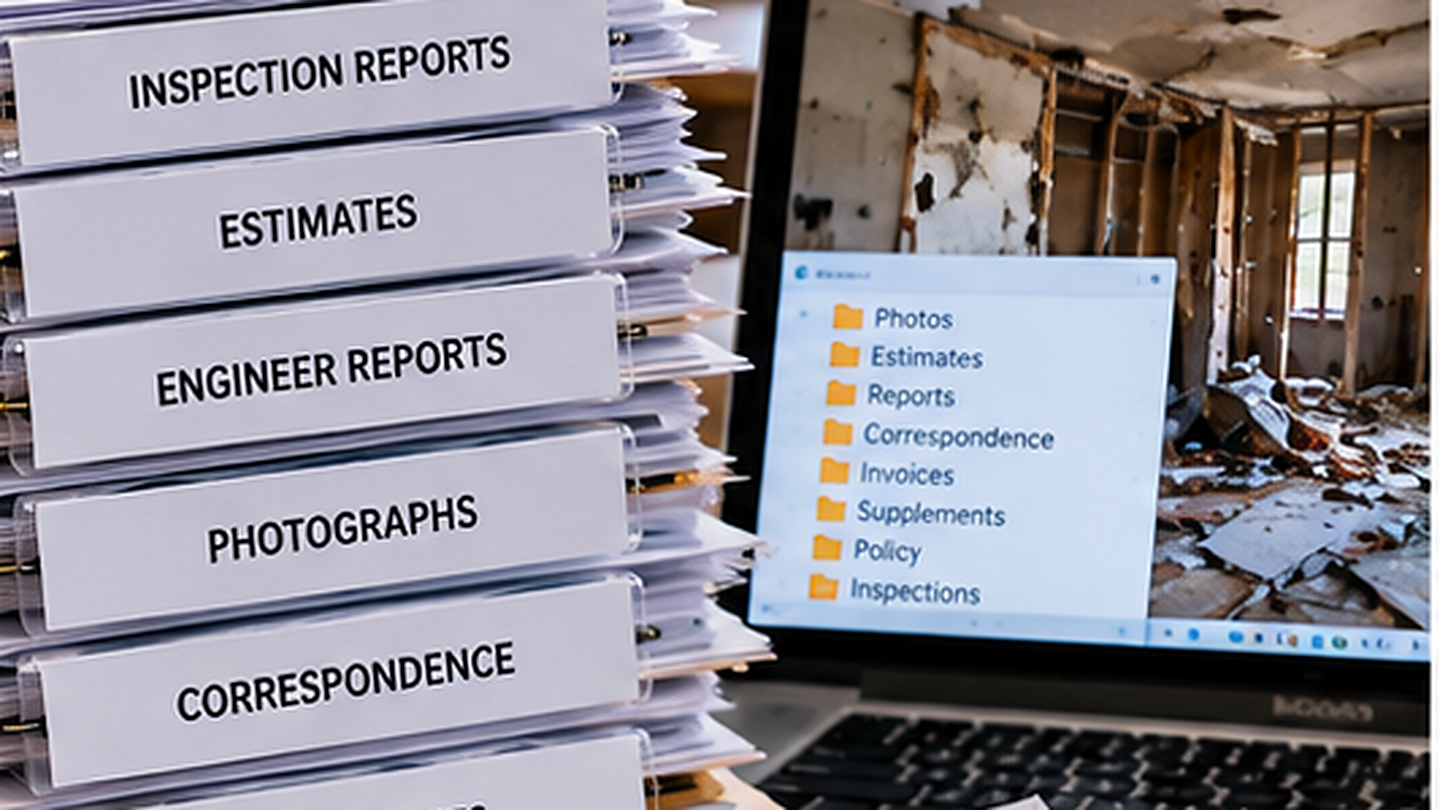
A property claim can include photographs, electronic estimates, inspection records, specialist reports, and months of correspondence, yet the central disagreement remains unresolved. The insurer may have received the documents. The contractor may have submitted a revised proposal. The policyholder may still be unable to determine what has been accepted, what remains disputed, or what is needed next.
Technology makes it easier to collect and distribute information. A claim advances when someone evaluates that information, resolves conflicts, and communicates a supported position. Understanding the gap between those activities helps explain why a well-documented file can still feel stalled.
What recent industry reporting says
In an October 5, 2026 Insurance Journal article, Don Jergler reported on Sedgwick’s loss-adjusting research and interviewed industry executives. Sedgwick’s Andrew McCallum described the loss of experienced claims professionals through retirement and the increasing complexity of claims. ATI Restoration’s Brant Wilson described the difficulty of getting information to people authorized to make decisions when numerous participants are involved.
Sedgwick’s public highlights for its 2026 Loss Adjusting Insights Report similarly identify workforce experience, complex losses, and the challenge of putting AI into effective operational use. They describe technology as supporting human expertise. These are industry perspectives grounded in data and professional experience, not proof that any individual claim is delayed. The full report is gated; the discussion here relies on the accessible highlights and Jergler’s reporting.
For an individual property claim, the more useful question is whether the available information has been turned into a documented decision or is still moving between participants. Staffing and software may affect the process, but the claim's record is needed to explain why an issue remains unresolved.
Receiving a report is only one step
A report’s arrival establishes that information has been supplied. Evaluation requires identifying what the report found, the question it addressed, and the limitations of its conclusions. The next step is determining how those findings affect the proposed work or the claim position.
A technical recommendation may require clarification before it can be priced. An estimate may assume a repair method that a later inspection calls into question. A report may address only one area of the property. Treating any of those documents as a complete answer can leave important issues unresolved.
A useful response explains whether the findings were accepted, disputed, or considered insufficient, and why. If further information is necessary, the request should identify the missing fact and how it affects the decision. Confirmation that a document was uploaded does not provide that explanation.
Separate assignments can leave gaps between professionals
A complex loss may involve an adjuster, estimating vendor, engineer, environmental consultant, contents specialist, and restoration contractor. Their assignments can be legitimate and necessary while answering different questions. An engineer may evaluate an assembly’s condition; an environmental consultant may investigate a defined contaminant; an estimator may price the work described in an assigned scope.
Completing those assignments does not establish that the conclusions fit together. The person reviewing the claim should identify conflicts, seek clarification from the appropriate professional, and explain how the findings affect the proposed work or the insurer’s stated position. A consultant’s report is not itself a coverage decision merely because an insurer commissioned it.
When responsibility is unclear, ask who is evaluating the outstanding issue, who can communicate the resulting position, and whether another person’s approval is required. That makes follow-up more useful than repeatedly sending the same documents to everyone copied on an email.
Technical findings must connect to the estimate
One important review is the connection between a technical report and the repair estimate. A recommendation to remove a damaged assembly may appear in a report while the estimate still allows only a surface repair. Conversely, an estimate may include replacement without explaining which finding supports it. The discrepancy needs evaluation in either direction.
An estimate can also include a repair without the access, temporary removal, or reinstallation work required to perform it. The question is whether the proposed operations can accomplish the documented repair. A reviewer should identify the affected location, the recommendation, the estimate entries addressing it, and any remaining difference.
A recommendation should not automatically become an additional charge. It may already be included elsewhere, depend on an unconfirmed condition, or fall outside the author’s assignment. Resolving those questions yields a more reliable estimate than adding items solely because they appear in a separate report.
Technology helps when its output can be checked
Software can organize photographs, locate correspondence, compare estimate versions, and flag apparent inconsistencies. These functions can reduce the time spent finding information and give reviewers a clearer view of what changed. The value depends on whether the output remains connected to its sources and is checked against the question being answered.
An automated summary may overlook a report’s qualification. Similar descriptions may refer to different work. A document marked complete in a tracking system may still leave the substantive question unanswered. Professional review must determine what the evidence supports, where it conflicts, and when input from another discipline is needed.
Technology does not necessarily cause delay, but faster processing does not, by itself, resolve a disagreement about what the evidence supports.
A meaningful response identifies the next action
A useful claim update should make the current position clear. It should identify the issue being addressed, the material considered, the conclusion reached so far, and any remaining deficiency. If a decision is pending, it should identify the person or role responsible and the action needed before that decision can be made.
“Awaiting review” becomes more useful when it specifies which report is under review, what question remains, and whether clarification has been requested. An expected response date, when available, also provides a basis for follow-up. These are practical communication goals, not a statement of a universal legal deadline.
Policyholders can follow up on specific unresolved questions
Keep a dated record of important submissions and responses. Identify each document by author, date, and version rather than referring to “the estimate.” Preserve the original report and all subsequent revisions so the parties can distinguish an unanswered request from a question addressed in a newer document. A short issue register can record the unresolved question, supporting source, date submitted, response received, and next action.
Written follow-up should focus on the missing decision. Ask which portions of a proposal have been accepted, which remain disputed, and what evidence would address the stated concern. If a contractor identifies omitted work, request its location, purpose, quantity, and supporting documentation. Forward that explanation with a clear question about how it will be evaluated.
After a telephone discussion, accurately record the substance and seek clarification of material uncertainties. An unanswered question alone does not establish bad faith, unreasonable delay, or a statutory violation. Coverage, contractual duties, and legal consequences depend on the applicable policy, jurisdiction, and facts; legal concerns require counsel’s review.
Professional assistance should match the unresolved issue
A public adjuster may assist an eligible policyholder with claim preparation and presentation under a separate engagement, when authorized. A claim consultant can examine a defined documentation or position conflict. An estimating specialist can reconcile quantities, methods, and costs. Engineers, environmental professionals, and other technical experts address questions within their qualifications. An attorney evaluates legal rights, policy interpretation, and remedies.
These roles serve different purposes. Define the question and the intended work product before retaining help. Additional reports are useful when they address a real evidentiary gap; another opinion that leaves the same question unanswered may simply add to the file.
The objective is a supported decision
The measure of progress is whether the parties understand the remaining issue and what will resolve it. Better organization supports that work, but a defensible position still needs an explanation connecting the evidence, proposed scope, and conclusion.
Absolute Adjusting’s Claim Consulting and Estimate Analysis services provide defined technical reviews of complicated property-claim records. Related educational guidance is available in the Claim Library. To request an initial review, identify the disputed question, current claim posture, and known deadline; confidential documents can be requested through an approved exchange method after fit and conflicts are evaluated.
General information: This article does not provide legal advice, determine coverage, or promise a claim outcome. Actual coverage and obligations depend on the operative policy and applicable jurisdiction.