
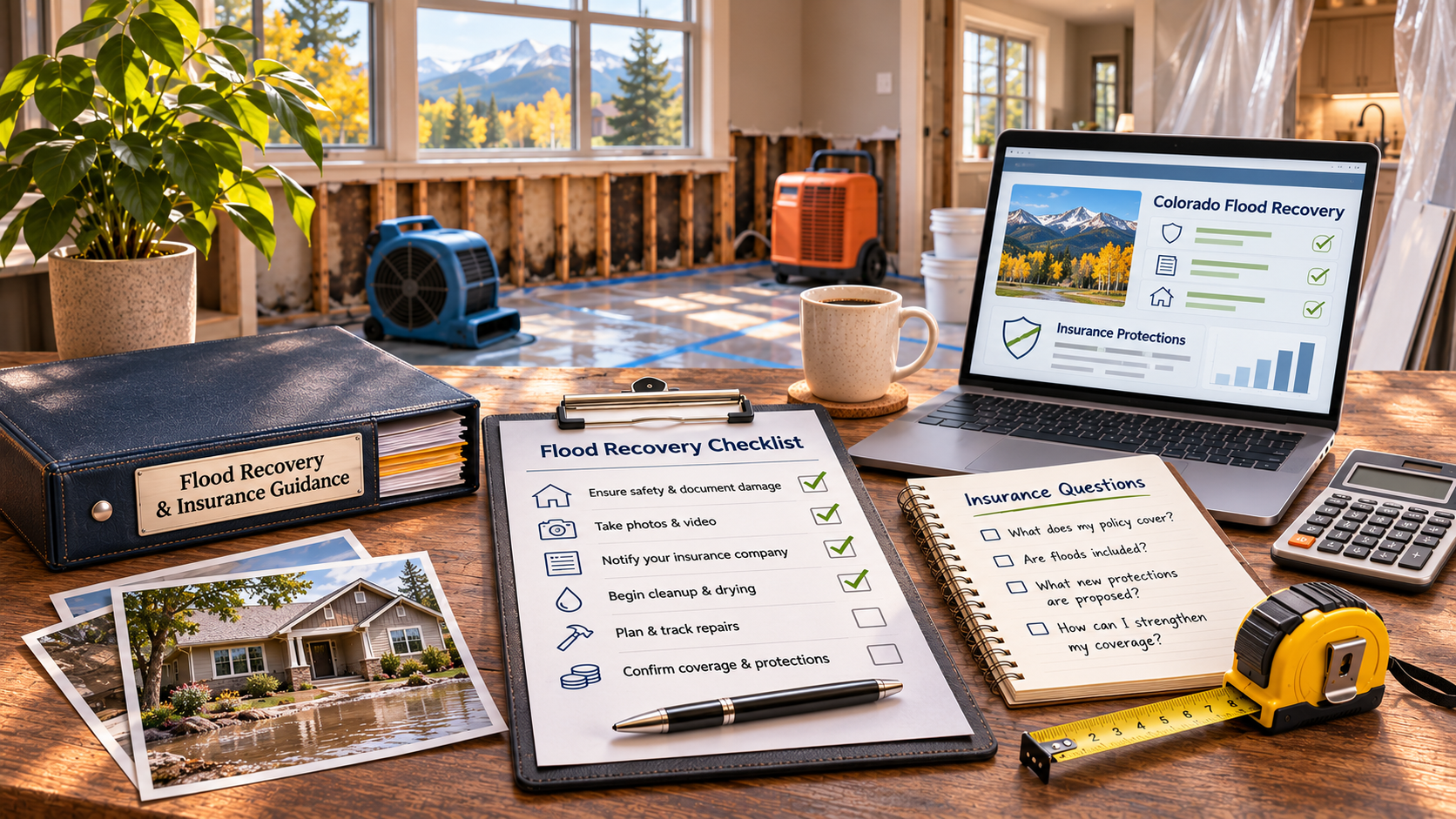
After the 2026 flooding, Colorado regulators proposed temporary safeguards. Property owners should separate those proposals from the policy that may actually pay a loss.
The immediate answer
On November 5, 2026, the Colorado Division of Insurance (DOI) invited public comment on proposed emergency protections for people affected by the 2026 floods. The proposals cover potential policy cancellations or nonrenewals, displaced personal property, certain adverse actions by insurers, and covered auto claims. They were presented as draft regulations, not protections already in effect. Before relying on them, check their final status and wording.
Just as importantly, temporary protections against certain insurer actions would not, by themselves, add flood coverage to a homeowners policy. Most standard homeowners policies exclude flood damage. A separate National Flood Insurance Program (NFIP) or private flood policy may be necessary, and the policy terms, date of loss, and source of damage remain central.
What Colorado has proposed
In its November 5 advisory, the DOI described measures intended to protect homeowners who cannot return to otherwise undamaged property because roads, utilities, access restrictions, or other flood-related conditions prevent occupancy. Proposed language would restrict certain cancellations and nonrenewals in those circumstances.
The advisory also describes proposed protections for insurance denials requested for federal disaster-assistance purposes, temporary relocation of personal property, treatment of damage arising after the floods, and expedited handling of covered auto claims. These are distinct issues. A proposal addressing occupancy or a cancellation decision should not be mistaken for a statement that water damage is insured under a separate property policy.
The DOI notice also discusses health-insurance proposals concerning medication access and enrollment. Those provisions are outside the scope of this property-insurance article. The DOI requested comments on the drafts by November 10, 2026. As of the November 5 source documents, the protection provisions were proposed; this article does not assert that any draft has been adopted.
Flood, rain, water backup, and auto damage may involve different coverage
Where the water came from matters. The NFIP explains that flood insurance generally covers direct physical damage caused by flooding, such as water entering from rising surface water or overflowing waterways, subject to the specific policy. Wind-driven rain entering through storm damage and sewer or drain backups may raise different coverage questions. Do not attribute every wet room to the same cause of loss without documenting how the water entered.
The DOI advisory explains that a basic homeowners policy does not include flood coverage. It directs flood policyholders to their NFIP or private flood insurer and notes that comprehensive automobile coverage can cover flood damage to insured vehicles. An owner's coverage depends on the policy purchased and the circumstances. Federal assistance is not a substitute for insurance, and its availability depends on applicable disaster and assistance requirements.
The practical step is to identify each potentially relevant policy, carrier, and claim number, rather than assume a homeowners claim automatically covers the entire flood loss.
What to document before cleanup changes the scene
Return only when local authorities and qualified personnel confirm it is safe. Flood cleanup may involve electrical hazards, contaminated water, structural damage, and other risks. Before conditions change, photograph the exterior, water lines, affected rooms, flooring, walls, equipment, contents, and debris. Take both overview shots and close-ups.
Preserve a dated record of what was removed, why it had to be removed, who did the work, what materials were sampled or retained, and all related invoices and receipts. When it is safe, photograph model and serial numbers. Health hazards may require prompt disposal, so do not delay safe, necessary action to gather documentation.
If roads, damaged bridges, utility problems, or an evacuation order restrict access, keep the written notice and record the dates access was restricted. This evidence may be relevant to an insurance claim, a restoration timeline, or any eventual regulatory protection for inaccessible property.
Keep three different questions separate
- What physical damage occurred, and which policy, if any, addresses that cause of loss?
- What is preventing occupancy or safe access now, and which authority or utility can document that restriction?
- What has the insurer actually decided about coverage, payment, cancellation, renewal, or relocated belongings?
Do not assume that a cancellation restriction, temporary contents accommodation, or expectation of an expedited auto claim alters the coverage limits or exclusions in a homeowners or flood policy. Conversely, do not treat a flood exclusion as shorthand for every possible cause of water damage without first examining the facts.
Where the public-comment process stands
The November 5 DOI emails invited comments on draft emergency regulations by November 10, 2026. The agency provided DORA_Ins_RulesandRecords@state.co.us for submitting comments and directed readers to its draft-regulations webpage. Before treating the November 5 draft language as operative, readers should check the DOI's current adopted and emergency regulation listings.
If a claim is already underway, keep correspondence with the insurer separate from any comments submitted to the regulator. Send documents to the insurer or claims administrator responsible for the policy, using the channel it identifies. Do not submit confidential claim files through public-facing comment forms.
The goal is to maintain a controlled recovery record: document the damage, identify the applicable insurance, retain access and displacement notices, and require each relevant participant to explain their own decisions. An independent public adjuster may assist with a properly authorized property claim; legal and regulatory interpretation should be left to counsel and the DOI.
Sources and further reading
- Colorado DOI, Request for Comment on Draft Proposed Emergency Regulations (November 5, 2026)
- Colorado DOI, Consumer Advisory on 2026 Flooding (November 5, 2026)
- National Flood Insurance Program, How to Document Flood Damage
- National Flood Insurance Program, Eligibility and Homeowners Insurance Limits
- National Association of Insurance Commissioners, Flood Insurance
Explore more property-insurance guidance in the Claim Library.